Motorcycle luggage
Waterproof Bike Side Bags: How to Keep Your Luggage Dry in the Indian Monsoon
Water-resistant vs waterproof bike side bags explained: roll-tops, welded seams, rain covers and dry bags — plus a monsoon packing method that keeps kit dry.
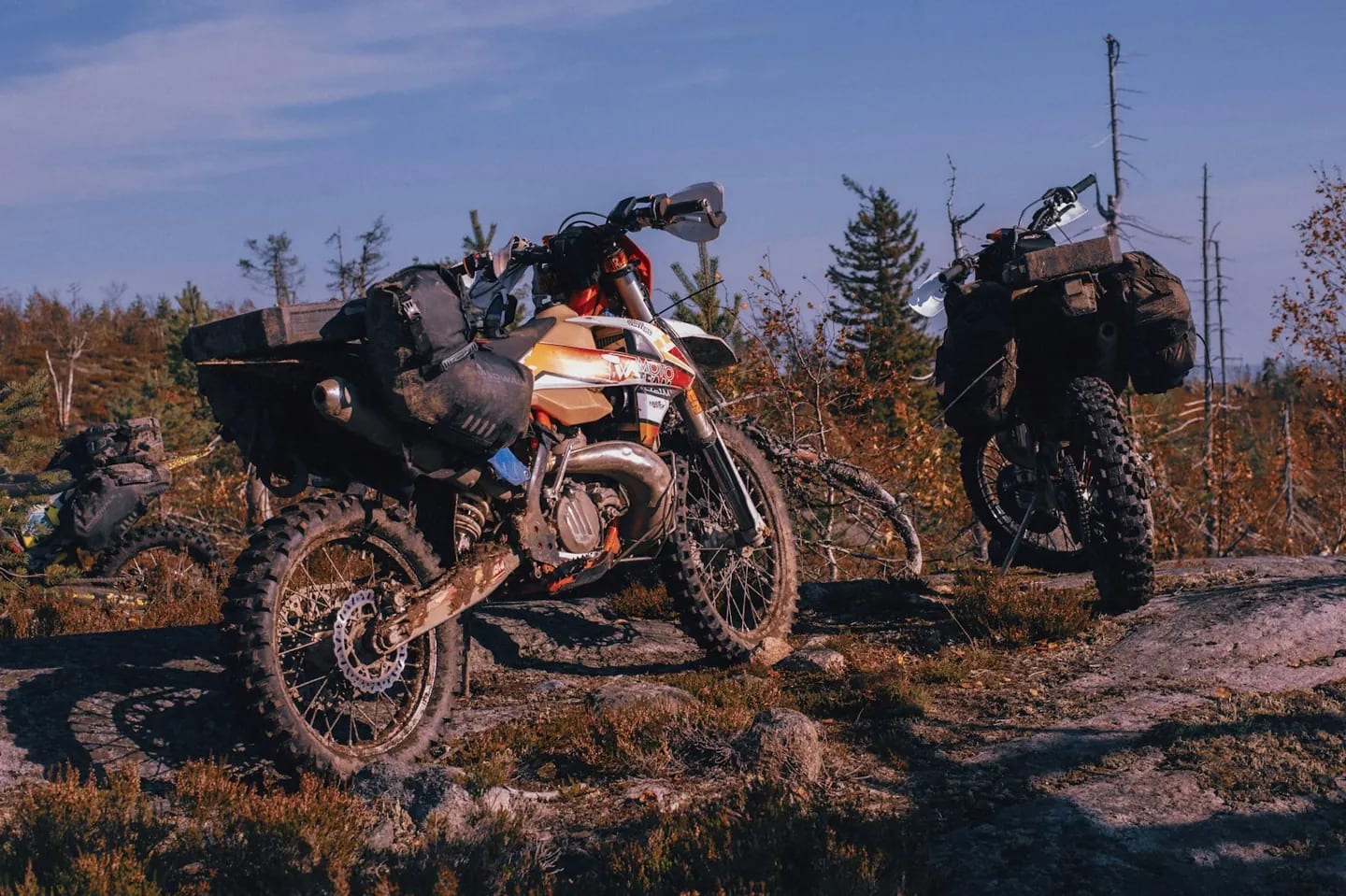
Short answer
Most fabric bike side bags are water-resistant, not waterproof: rain eventually gets in through zips and stitching. For the Indian monsoon, choose roll-top bags with welded or taped seams, or use a fitted rain cover plus dry bags inside. Pack electronics and documents in their own sealed bags, keep spare clothes in the middle, and dry the bags fully after every wet ride to prevent mould.
Key takeaways
- Water-resistant fabric slows rain; only sealed construction (roll-top + welded or taped seams) keeps it out.
- Zips and stitch holes are where water gets in — a rain cover protects both.
- Double protection works best: a rain cover outside and dry bags inside.
- Dry and air bags after every wet ride to stop mould and odour.
Water-resistant is not waterproof
Every rider who has unpacked soggy clothes after a monsoon ride knows the difference. Most fabric side bags are water-resistant: the fabric has a coating that sheds light rain. But water has three easy ways in:
- Zips — even coated zips leak under sustained rain and road spray.
- Stitch holes — every needle hole is a path for water unless the seams are taped or welded.
- The opening — flaps and zipped lids let water run in at the edges.
A waterproof side bag is built so none of these can happen: a roll-top closure instead of a zip, welded or seam-taped construction, and a fabric such as PVC or TPU-laminated tarpaulin that does not let water through.
How waterproof does your bag need to be?
India's southwest monsoon brings heavy, prolonged rain to most of the country from roughly June to September, with the west coast, the North-East and the Western Ghats among the wettest regions. How you ride decides how much protection you need:
| Riding | Recommended protection |
|---|---|
| City commute, occasional showers | Coated nylon or polyester bag + rain cover |
| Highway rides in monsoon | Rain cover + dry bags for clothes and electronics |
| Multi-day touring in the rain, coastal and Ghat roads | Roll-top waterproof bags, or rain cover + dry bags |
| Himalayan trips with water crossings | Welded roll-top tarpaulin bags + inner dry bags |
The four ways to keep luggage dry
1. Roll-top waterproof side bags
The most reliable option. You roll the opening down three or more times and clip it shut, creating a seal that zips cannot match. Combined with welded seams, these bags keep water out even in heavy rain.
2. Seam-sealed bags with water-resistant zips
A middle ground: coated fabric with taped seams and water-resistant zips with a storm flap. Good protection for most monsoon riding, and easier to access than a roll-top.
3. Rain covers
A fitted rain cover goes over the whole bag and is pulled tight with a drawcord. It protects the weak points — zips and seams — and many have reflective print for visibility in low light. Covers are inexpensive and work with almost any bag.
Fit the rain cover before the rain starts. Once the bag's fabric is soaked, water keeps wicking inside even after you cover it.
4. Dry bags inside
Small roll-top dry bags inside your side bags are the safest way to protect electronics, documents and a change of clothes. Even if the outer bag leaks, what matters stays dry.
A monsoon packing method that works
- Line the bag with a large dry bag or a heavy-duty plastic liner.
- Electronics and documents go into their own small dry pouch — charger, power bank, papers, cash.
- Spare clothes in a separate dry bag in the middle of the side bag, where they are best protected.
- Wet gear (used rain suit, wet gloves) goes in an outer pocket or a separate bag, never with dry clothes.
- Rain cover on before you ride, drawcord tight, loose ends tucked away.
Material matters too
- PVC or TPU tarpaulin — waterproof when seams are welded; the best choice for heavy rain.
- High-denier nylon or polyester with PU coating — water-resistant; needs a rain cover in sustained rain.
- Waxed canvas — naturally water-resistant; re-wax every season.
- Leather — absorbs water if untreated; use a cover and condition it after wet rides.
Read our full comparison of leather vs nylon vs canvas saddlebags.
After the ride: drying and care
- Empty the bags the same day; never leave wet clothes inside overnight.
- Open every zip and pocket and air-dry in the shade with good ventilation.
- Wipe mud off zips and lubricate them occasionally so they don't jam.
- Do not dry bags against the hot exhaust or a heater; heat damages coatings and leather.
- Condition leather bags once they are completely dry.
Visibility in the rain
Monsoon riding often means low light, spray and fogged visors. Reflective strips or printed reflective panels on side bags and rain covers make the bike visible from behind and from the side — a simple safety feature worth choosing.
Frequently asked questions
Vago Team
Motorcycle luggage specialists
Vago designs and manufactures motorcycle side bags, saddlebags and touring luggage in Jasdan, Gujarat, for riders, accessory dealers and private-label brands across India.
- waterproof
- monsoon
- side bags
- touring
- rain
Keep reading
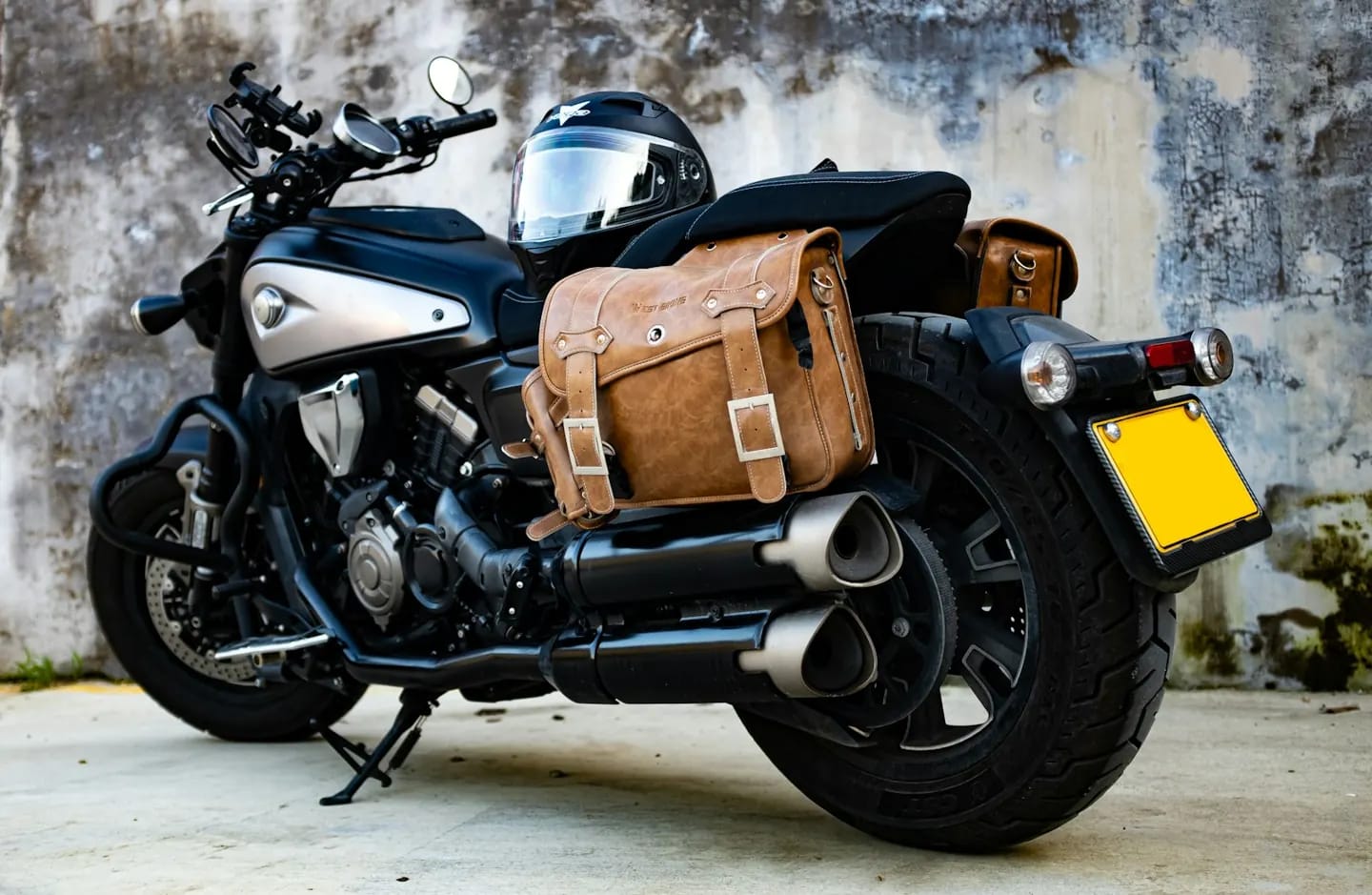
Motorcycle luggage · 6 min read
Royal Enfield Side Bags: The Complete Buyer's Guide for Bullet, Classic, Himalayan & 650 Riders
How to choose Royal Enfield side bags: capacity, materials, waterproofing, exhaust heat, mounting and fitment for Bullet, Classic, Himalayan and 650s.
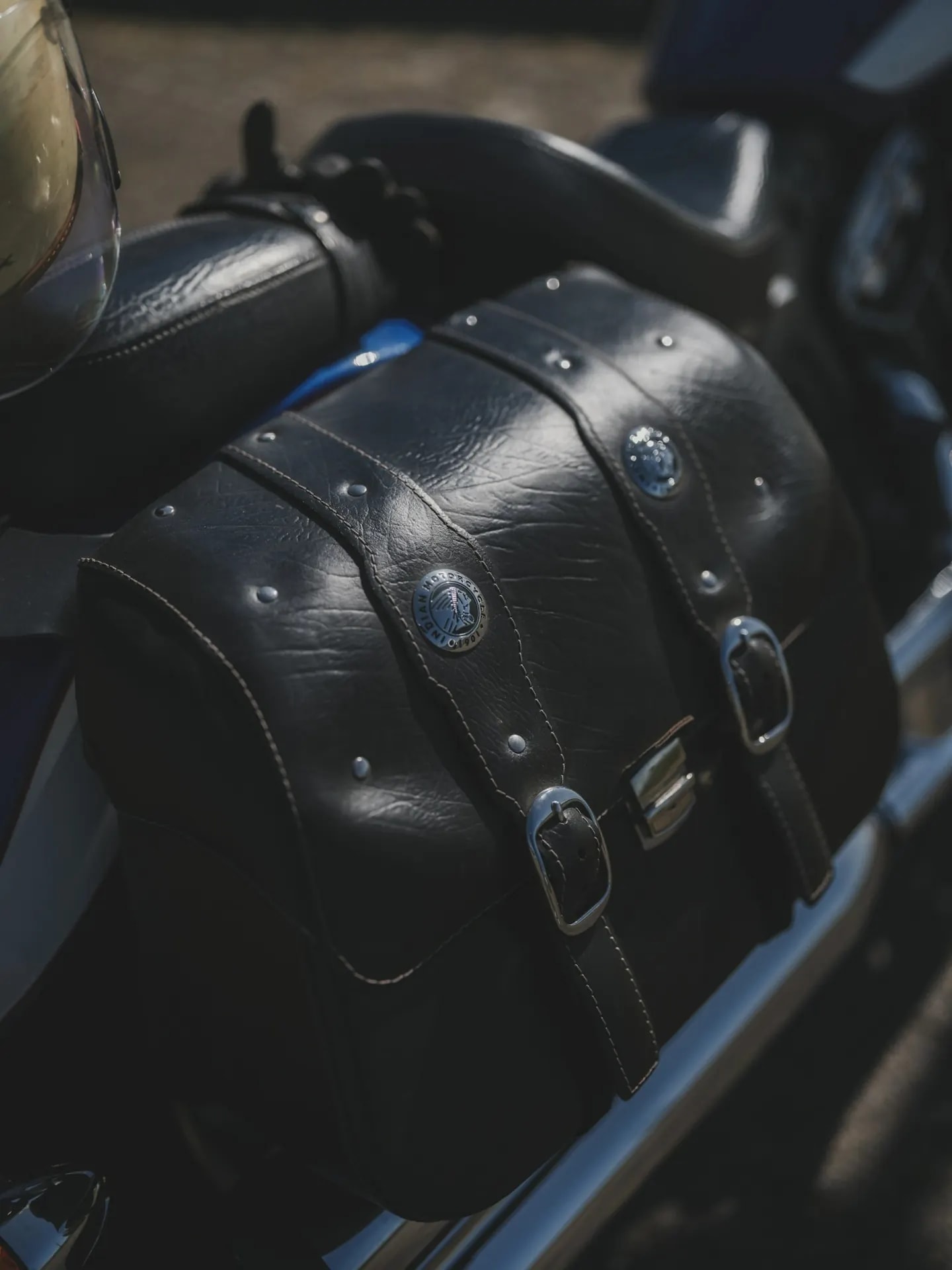
Materials · 3 min read
Leather vs Nylon vs Canvas vs Tarpaulin: Which Motorcycle Saddlebag Material Is Best?
Compare leather, PU leather, ballistic nylon, waxed canvas and tarpaulin saddlebags on durability, waterproofing, weight, heat, care and cost.
Motorcycle touring · 4 min read
Ladakh Bike Trip Luggage Guide: Side Bags, Packing List and Setup for Leh–Ladakh on a Royal Enfield
Plan luggage for a Leh–Ladakh bike trip: which side bags to use, how much space you need, a complete packing list and how to load your Royal Enfield safely.