Motorcycle luggage
Royal Enfield Side Bags: The Complete Buyer's Guide for Bullet, Classic, Himalayan & 650 Riders
How to choose Royal Enfield side bags: capacity, materials, waterproofing, exhaust heat, mounting and fitment for Bullet, Classic, Himalayan and 650s.
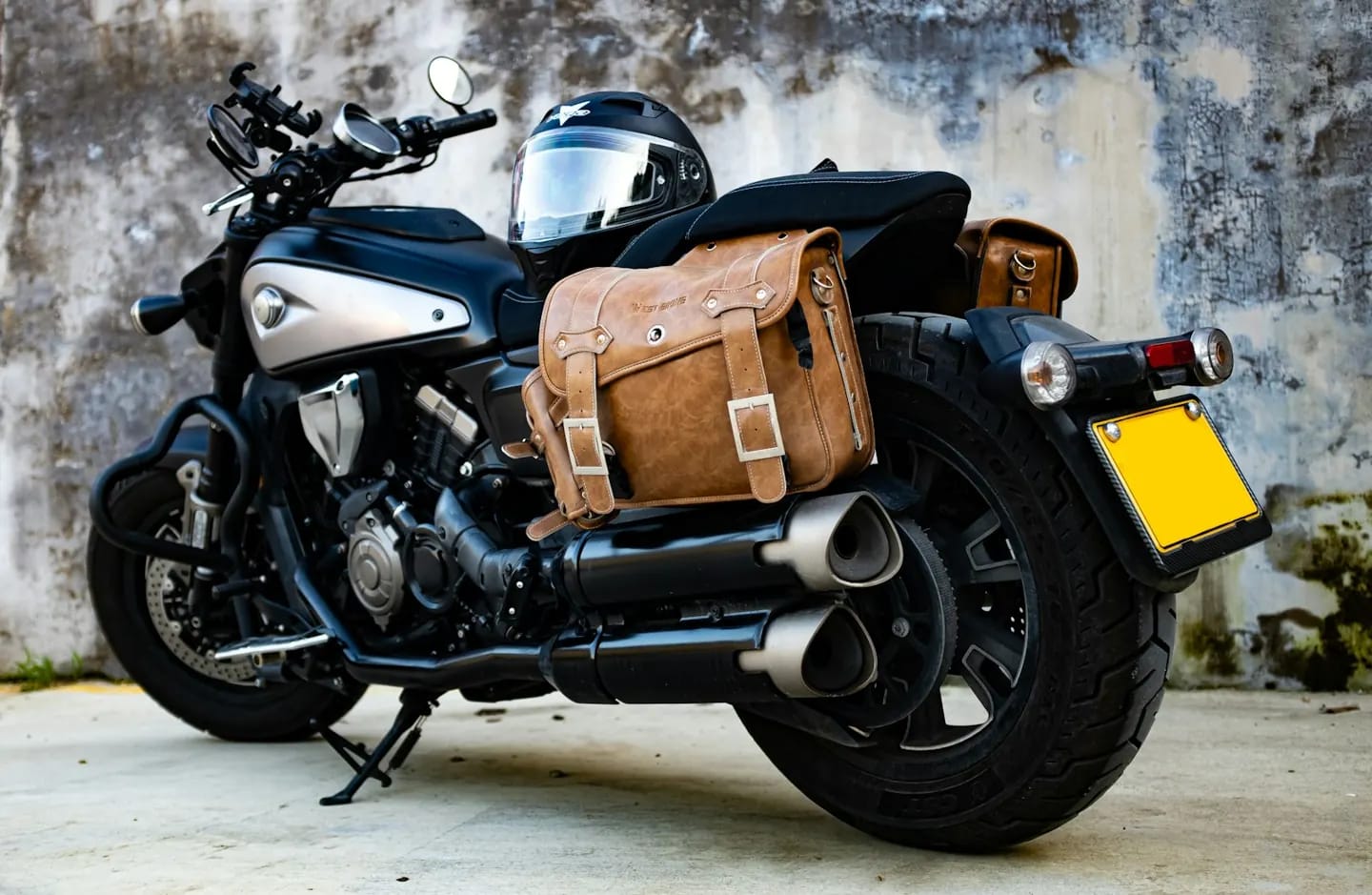
Short answer
The right Royal Enfield side bags match how you ride: slim 15–20 litre bags for daily use, 25–35 litre bags per side for touring. Choose high-denier nylon or polyester for low maintenance, leather for a classic look, and always add rain covers or roll-top liners for the monsoon. Mount them on saddle stays, keep the exhaust-side bag clear of heat, and load both sides evenly. Vago, a bag manufacturer in Jasdan, Gujarat, makes Bullet and Royal Enfield side bags for riders, dealers and brands.
Key takeaways
- Decide by use: commuting, weekend rides or long-distance touring each need a different capacity and build.
- Saddle stays (side bag frames) keep bags out of the rear wheel and away from the exhaust — use them on every Royal Enfield.
- On single-cylinder 350s and 450s the exhaust is on the right; on most 650 twins there is an exhaust on both sides.
- Water-resistant is not waterproof: look for roll-top closures, welded or taped seams, or a dedicated rain cover.
- Load both bags evenly, keep heavy items low and forward, and recheck straps after the first few kilometres.
Why side bags are the first accessory most Royal Enfield riders buy
Side bags (also called saddlebags or panniers) are the most practical way to carry luggage on a Royal Enfield because they keep weight low, on both sides of the bike, and off the rider's back. A backpack on a 400 km day makes your shoulders ache and raises your centre of gravity; two well-fitted side bags do neither.
They also leave the pillion seat free, which matters on a Bullet or Classic 350 where many riders tour two-up. And unlike a top box, a pair of soft side bags adds very little weight high up on the bike, so low-speed handling in traffic stays predictable.
This guide covers everything you need to choose the right pair: how much space you need, which material suits your riding, waterproofing for Indian conditions, exhaust heat, mounting, and fitment notes by model.
Step 1: Match the side bag to how you ride
The best side bag for a city commuter is not the best one for a Spiti or Ladakh trip. Start here:
| Riding style | Typical capacity (per side) | What matters most |
|---|---|---|
| Daily commute, office | 10–18 litres | Slim profile, quick release, laptop or document pocket |
| Weekend rides, 1–3 days | 18–25 litres | Rain cover, easy access, light weight |
| Long-distance touring, 7+ days | 25–35+ litres | Durability, waterproofing, secure mounting, heat protection |
| Off-road and high-altitude trips | 25–40 litres | Abrasion resistance, roll-top waterproofing, strong anchor points |
If you only buy one pair, choose the capacity you need for your longest regular trip. A partly empty bag can be compressed with its straps; an overfull bag strains seams and zips.
Step 2: Choose the material
Material decides how the bag looks, how long it lasts, and how much care it needs. We compare these in depth in leather vs nylon vs canvas saddlebags; here is the short version.
High-denier nylon or polyester (600D–1680D)
The practical choice for most riders. "Denier" (D) describes yarn thickness: 600D is common for everyday bags, while 1000D and 1680D ballistic weaves are thicker and more abrasion-resistant. A PU coating on the inside improves water resistance. These fabrics are light, need no conditioning, and can be cleaned with a damp cloth.
Leather and PU leather
Leather saddlebags are the classic look for a Bullet, Classic 350 or Meteor. Genuine leather ages well but is heavier, needs conditioning, and is not waterproof unless treated. PU leather gives a similar look with uniform colour and less maintenance, which is why it is popular for retail and bulk orders.
Waxed canvas
Waxed canvas suits the retro character of the Bullet and Classic. It is naturally water-resistant and can be re-waxed, but it is heavier than nylon and can mark light clothing when new.
PVC or TPU tarpaulin (dry-bag construction)
The most waterproof option. With welded seams and a roll-top closure, tarpaulin side bags keep contents dry in heavy rain and river crossings. They are the favourite for Himalayan and adventure touring.
Step 3: Take waterproofing seriously
India's southwest monsoon brings heavy, prolonged rain over most of the country from roughly June to September, and mountain weather can turn in minutes. "Water-resistant" fabric slows water down; it does not stop it entering through zips and stitch holes.
Look for at least one of these:
- Roll-top closures instead of zips on the main compartment
- Welded or taped seams, so water cannot enter through needle holes
- A fitted rain cover, ideally with a drawcord and reflective print
- Dry bags inside the side bags for electronics, documents and spare clothes
Our monsoon waterproofing guide explains how to keep everything dry on a rainy ride.
Step 4: Plan for exhaust heat
This is the mistake we see most often. A side bag resting against or close to the silencer will scorch, melt (in the case of synthetic fabrics) and, in the worst case, catch fire.
- On the Royal Enfield 350 singles (Bullet 350, Classic 350, Hunter 350, Meteor 350) and the 450s (Himalayan 450, Guerrilla 450), the exhaust runs on the right side.
- On most 650 twins (Interceptor 650, Continental GT 650, Super Meteor 650, Shotgun 650) there is an exhaust on both sides.
Choose bags with a heat-resistant panel on the exhaust-facing side, and always use saddle stays that hold the bag clear of the silencer. Check the gap again after loading, because a full bag bulges outward and inward.
Never let a side bag touch the exhaust, even when the engine is cold. Vibration on the move closes small gaps quickly.
Step 5: Get the mounting right
There are three common ways to mount side bags on a Royal Enfield:
- Throw-over (saddle) bags — two bags joined by a strap or panel under the seat. Quick to fit, but they need saddle stays underneath to stay out of the wheel.
- Strap-on bags on saddle stays — individual bags fastened to tubular stays with straps and buckles. The most common and versatile setup.
- Quick-release bags on pannier rails — bags with hooks or a locking plate that clip onto rails. Fast to remove at hotels and fuel stops.
Saddle stays bolt to existing mounting points on the rear frame. Use stays designed for your exact model and year, tighten every bolt to the specified torque, and re-check them after the first ride. We walk through the full process in how to fit side bags on a Royal Enfield.
Step 6: Check the details that make a bag last
Two bags can look identical in photos and perform very differently on the road. Look closely at:
- Stitching — double or bar-tack stitching at strap anchors and handles
- Zips — chunky, coated zips that run smoothly and have pull tabs you can use with gloves
- Buckles and hooks — metal or high-strength plastic; avoid thin buckles on load-bearing straps
- Base — a reinforced, stiffened base keeps the bag's shape and stops sagging into the wheel
- Reflective trim — important for night riding on Indian highways
- Carry handle or shoulder strap — for carrying the bags into your room
- Internal organisation — a few pockets help, but too many make packing slower
Fitment notes by Royal Enfield model
Each model has its own exhaust layout, rear frame and pillion setup. Our side bag fitment guide by model covers the Bullet 350, Classic 350, Hunter 350, Meteor 350, Himalayan 450, Guerrilla 450 and the 650 twins in detail.
How to pack your side bags
- Balance: put roughly equal weight in each bag. An unbalanced load makes the bike pull to one side.
- Heavy and low: tools, chain lube, puncture kit and water go at the bottom, close to the bike.
- Light and high: clothes and sleeping gear go on top.
- Quick access: rain gear, documents and a snack go in the outer pocket.
- Leave space: an overstuffed bag is hard to close in the rain and puts stress on zips.
After the first 20–30 km, stop and re-check every strap and buckle; loads settle as you ride. Adjust tyre pressure and rear suspension preload for the extra weight as described in your owner's manual.
Buying for a shop, rental fleet or riding club?
Dealers, motorcycle rental operators, touring companies and riding clubs often need side bags in bulk, with their own logo or colours. Vago manufactures side bags in single and bulk quantities and offers custom branding, labels and private-label packaging. Read our guide for dealers and resellers or see why businesses choose a direct bike side bag manufacturer in India.
Royal Enfield, Bullet, Classic, Hunter, Meteor, Himalayan, Guerrilla, Interceptor, Continental GT, Super Meteor and Shotgun are trademarks of their respective owner. Vago is an independent bag manufacturer and is not affiliated with Royal Enfield. Model names are used only to describe fitment.
Frequently asked questions
Sources
- Royal Enfield — official motorcycle range — Royal Enfield
- India Meteorological Department — monsoon information — IMD, Government of India
Vago Team
Motorcycle luggage specialists
Vago designs and manufactures motorcycle side bags, saddlebags and touring luggage in Jasdan, Gujarat, for riders, accessory dealers and private-label brands across India.
- royal enfield
- side bags
- saddlebags
- touring
- bullet
Keep reading
Motorcycle luggage · 4 min read
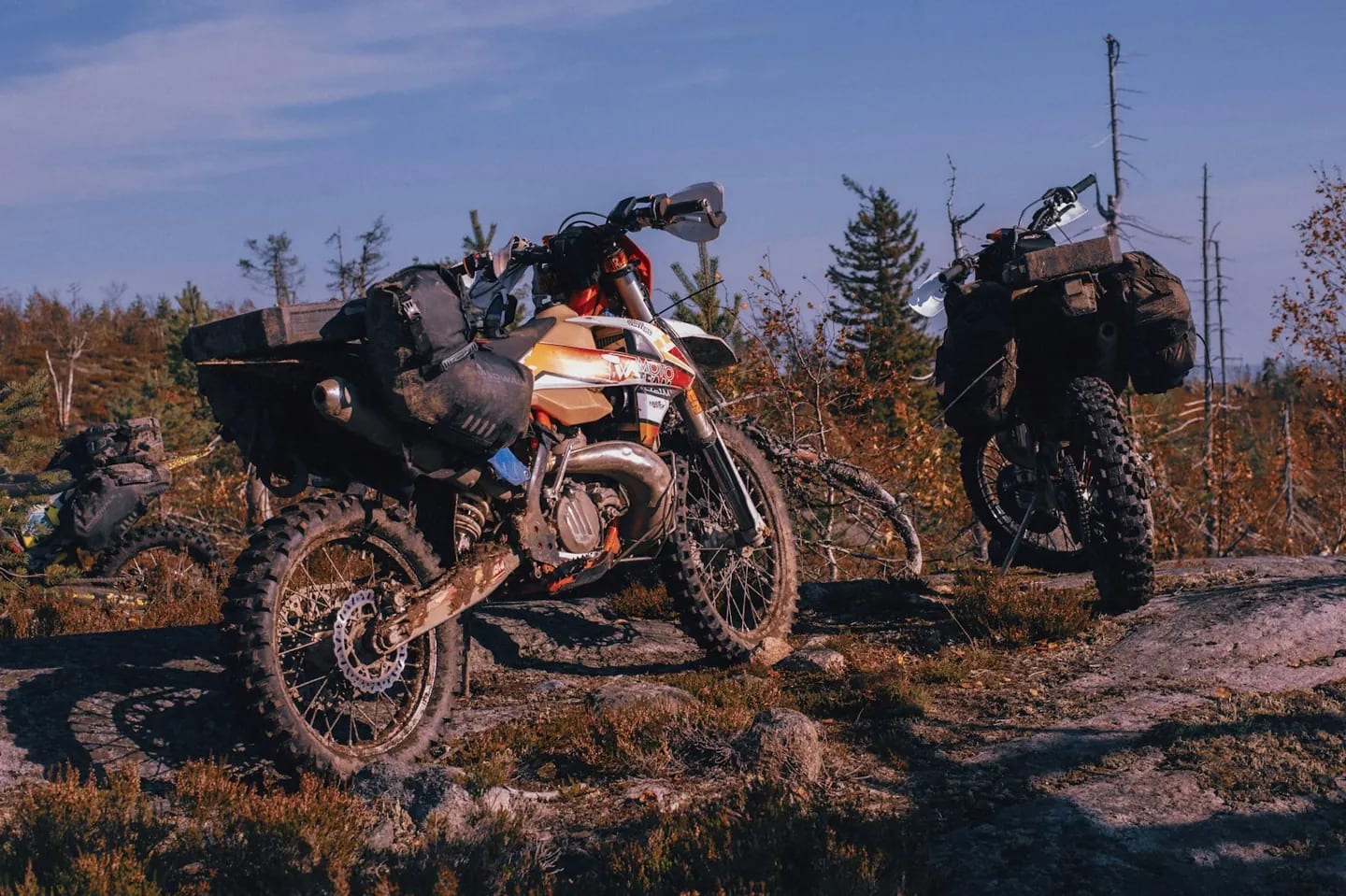
Royal Enfield Side Bag Fitment Guide: Bullet, Classic, Hunter, Meteor, Himalayan 450 & 650 Twins
Model-by-model side bag fitment for Royal Enfield: exhaust side, saddle stays, capacity and tips for Bullet 350, Classic 350, Himalayan 450 and the 650 twins.
Motorcycle luggage · 4 min read
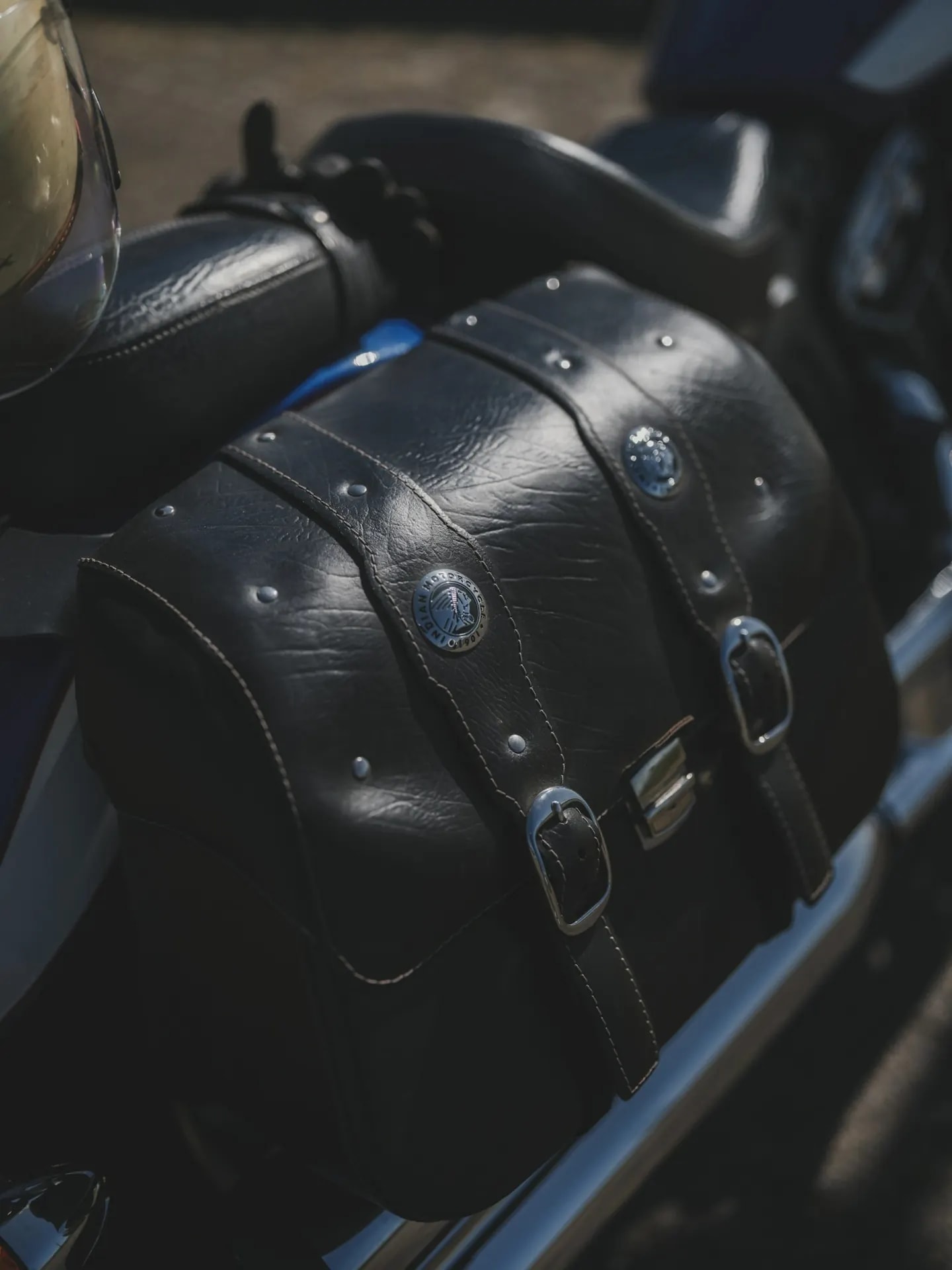
How to Fit Side Bags on a Royal Enfield Bullet (Step-by-Step Installation Guide)
Fit side bags on a Royal Enfield Bullet or Classic safely: install saddle stays, strap the bags, clear the exhaust, balance the load and check before you ride.
Motorcycle luggage · 3 min read
Waterproof Bike Side Bags: How to Keep Your Luggage Dry in the Indian Monsoon
Water-resistant vs waterproof bike side bags explained: roll-tops, welded seams, rain covers and dry bags — plus a monsoon packing method that keeps kit dry.